500+
Indian salons using SalonBoost
2-5%
Payroll lost to buddy punching
20%
More repeat visits
₹799
Software from / month
This guide covers:
- The real cost of poor staff management in Indian salons
- Triple-verification attendance: QR + WiFi + OTP
- Real-time attendance dashboard
- Auto payroll: from attendance to salary in one click
- Commission and incentive structures that work
- Manual register vs SalonBoost comparison
- Staff performance tracking and analytics
- Common staff management mistakes
- KPIs every salon owner should track
- Getting started with SalonBoost
The Real Cost of Poor Staff Management in Indian Salons
Ask any salon owner what their biggest operational headache is, and you'll hear the same answer: staff management. Not the haircuts, not the products, not even rent — the people. And in India's beauty and wellness industry, where 90% of salons are owner-operated with 3-15 staff members, the problem hits harder than most owners realize.
Here's a number that should get your attention: staff scheduling conflicts lead to 25% higher turnover in the salon industry. Every time a stylist leaves, you lose 3-6 months of training investment, their loyal client base, and anywhere from ₹15,000-₹30,000 in recruitment and onboarding costs. In tier-2 and tier-3 cities — where SalonBoost sees the strongest adoption — finding trained replacements takes even longer.
But turnover is just the visible symptom. Below the surface, poor staff management creates a cascade of daily problems that silently drain profitability:
- Buddy punching: One staff member signs in for another who hasn't actually arrived. Industry estimates put the cost at 2-5% of total payroll
- Payroll disputes every month: “I worked 26 days, not 24” — and you have no reliable proof either way
- Late arrivals going untracked: Your 10 AM shift regularly starts at 10:30, but there's no verifiable record
- Overstaffing on slow days: You're paying 4 stylists to sit idle on a Tuesday morning
- Understaffing on peak days: Saturday afternoon has a 45-minute wait, clients walk out and don't come back
- Commission confusion: No clear system for tracking per-service incentives leads to resentment
- Owner time drain: 4-8 hours every month spent counting register entries, reconciling attendance with payroll, and resolving disputes
Let's put real numbers to this:
For a salon spending ₹1,50,000/month on staff, buddy punching alone costs ₹3,000-₹7,500 per month — that's ₹36,000-₹90,000 per year in attendance fraud. Add payroll disputes, overtime miscalculations, and scheduling inefficiencies, and you're looking at ₹1-2 lakh in annual losses.
Most salon owners don't see these losses because they're spread across dozens of small errors every month. But they compound. Over three years, that's ₹3-6 lakh leaked — enough to fund a complete salon renovation.
The root cause of all these problems is the same: attendance data, payroll calculations, and performance tracking live in three separate places. The register says one thing. The Excel sheet says another. The staff member remembers a third version. Every month, the owner plays detective trying to reconcile them all.
Most Indian salons — especially those with 3-15 staff — rely on one of three attendance systems, each with critical flaws:
The Paper Register
A notebook at the front desk where staff write their name and sign-in time. The problems:
- • Staff can write any time they want (10:00 AM when they arrived at 10:25)
- • No way to verify the entry — it's just ink on paper
- • A friend can sign in on someone's behalf
- • End-of-month payroll requires manually counting 30 pages of scribbled entries
- • Registers get “lost” conveniently when there's a dispute
The Biometric Machine
Fingerprint scanners seem like a good upgrade, but they come with their own issues in salon environments:
- • Hardware costs ₹8,000-₹25,000 — a big investment for a small salon
- • Fingerprints fail when hands are wet, oily, or have product residue (extremely common in salons)
- • Standalone machines don't connect to your billing software or payroll system
- • You still have to manually transfer attendance data to calculate salaries
- • Machines break, need maintenance, and have poor customer support in smaller cities
The WhatsApp “System”
Some salon owners ask staff to send a “Good morning” message on WhatsApp when they arrive:
- • Messages can be sent from anywhere — home, the bus, or the chai stall next door
- • No actual verification that the person is at the salon
- • You'd have to scroll through hundreds of messages at month-end to count attendance
- • No login/logout tracking — you only know when they said they arrived
All three methods share the same fundamental problem: they don't integrate with your billing, payroll, or CRM. Attendance data sits in one place, payroll in another, and performance data in a third. Every month, the owner spends hours stitching it all together — and disputes still happen. This is exactly the problem that SalonBoost's staff attendance and payroll system was built to solve.
Triple-Verification Attendance: QR + WiFi + OTP
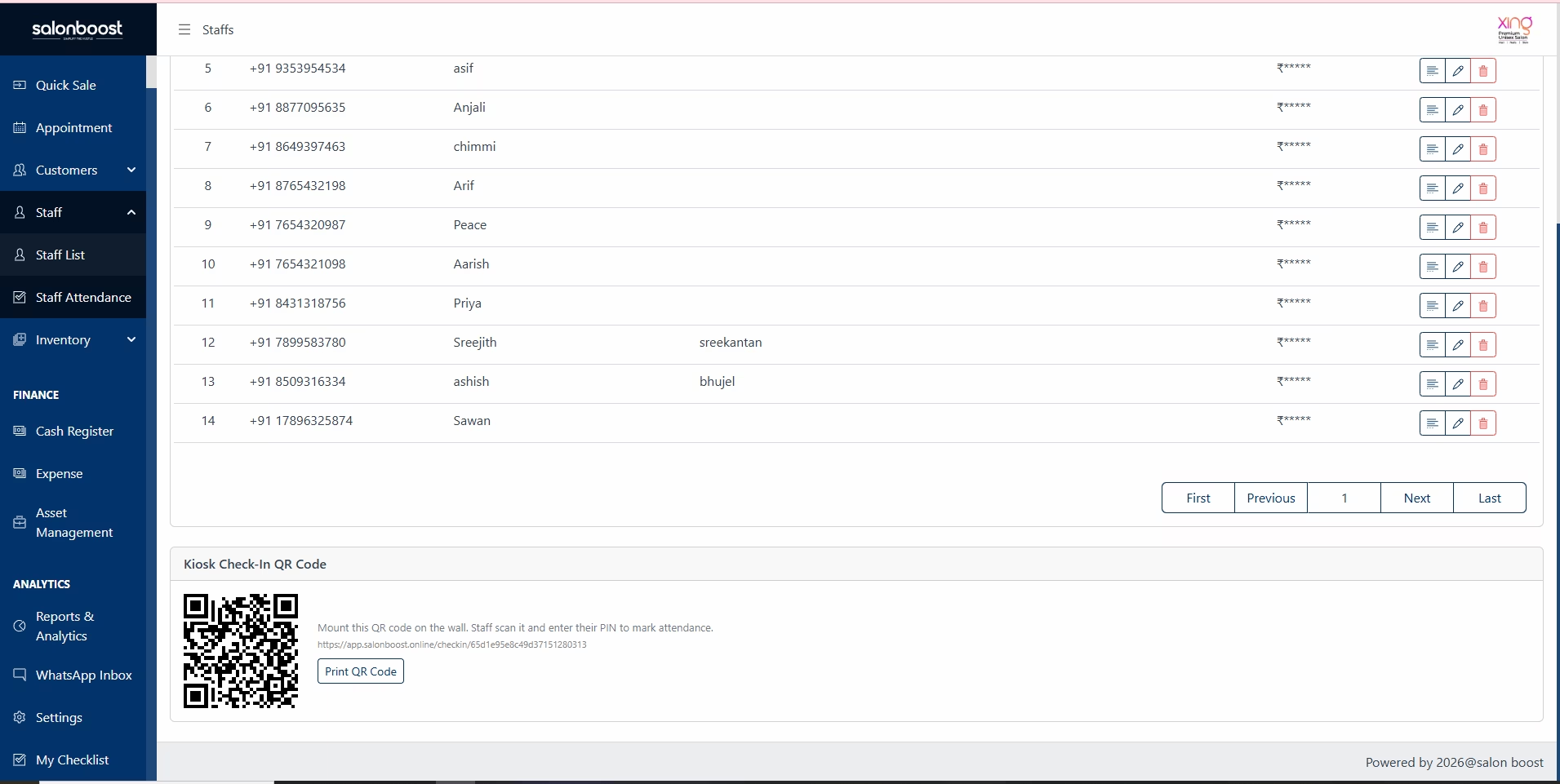
SalonBoost uses a three-layer verification system that makes buddy punching physically impossible. Unlike biometric machines that rely on a single factor (fingerprint), this system combines three independent checks — each closing a different loophole.
Layer 1: QR Code Scan
A unique QR code is displayed at the salon (printed poster or on a tablet at reception). Staff open the SalonBoost app on their phone and scan to initiate check-in. The QR code rotates periodically, so old screenshots become invalid.
What this prevents: Staff can't check in remotely using a saved photo of the QR code.
Layer 2: WiFi Geofencing
The QR scan only works when the staff member's phone is connected to the salon's WiFi network. The system verifies the WiFi SSID and BSSID (the router's unique identifier), not just the network name. If they're not physically in the salon, the scan fails immediately.
What this prevents: Someone standing outside the salon or in a neighboring building can't check in, even with the correct QR code.
Layer 3: OTP Verification
After the QR scan passes WiFi verification, the staff member receives a one-time password on their registered mobile number. They must enter this OTP within 60 seconds to complete the check-in. Since the OTP goes to the individual's personal phone number, no one else can complete the check-in on their behalf.
What this prevents: Buddy punching. Even if a colleague has your phone and is standing at the salon, they can't receive your OTP.
Why this is more secure than biometrics:
Biometric machines use one factor (fingerprint) that often fails in salon environments where hands are wet, oily, or have chemical residue. SalonBoost uses three independent factors: QR code (something you scan) + WiFi lock (somewhere you are) + OTP (something you have). Three layers beat one — and at zero hardware cost. The only equipment needed is the smartphone your staff already carry.
SalonBoost also supports auto-attendance via billing as a complementary method. When a staff member creates their first bill of the day, the system automatically marks them present with the exact timestamp. This is tamper-proof because bills are tied to real transactions — you can't fake a bill without a real client. It's ideal for stylists and therapists who directly serve clients.
Real-Time Attendance Dashboard
Knowing that attendance is being recorded accurately is only half the battle. You also need visibility — the ability to see, at a glance, what's happening with your team right now. Not at the end of the month when it's too late to act.
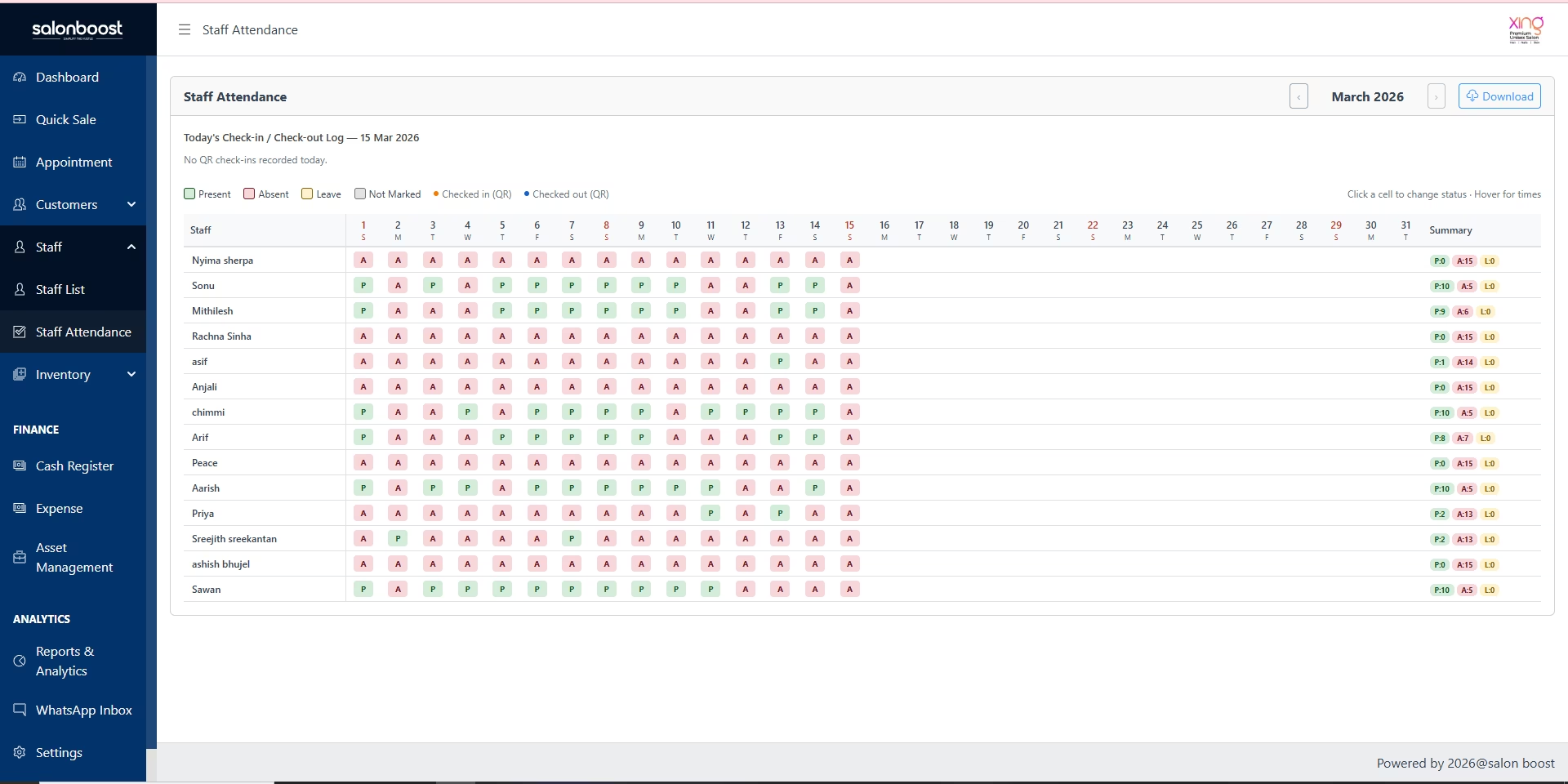
SalonBoost's real-time attendance dashboard shows you:
Who's checked in
Green status for staff currently at the salon with exact login time
Who's late
Yellow flag for staff who haven't checked in by their scheduled time
Who's absent
Red status for no-shows, with approved vs. unapproved leave distinction
Monthly summary
Total present days, leaves taken, half-days, and overtime per staff member
The dashboard works in real time across multiple branches if you operate more than one location. You can check it from your phone while you're at home, travelling, or at another branch. No more calling the receptionist to ask “Has Ravi come in yet?”
Leave management is also built in. Staff request leaves through the SalonBoost app, and you approve or deny with one tap. The leave is automatically reflected in the attendance record and deducted from their payroll — no manual tracking needed. You can set leave policies (paid leaves, casual leaves, sick days) and the system enforces them consistently.
Auto Payroll: From Attendance to Salary in One Click
Once attendance is captured accurately and automatically, payroll should calculate itself. That's exactly what SalonBoost does. The payroll engine pulls attendance data directly and computes net salary by factoring in every variable:
Present days & leaves
Auto-counted from attendance records — no manual tallying needed
Half-days & late arrivals
System detects late check-ins and auto-marks half-days based on your rules
Overtime hours
Calculated from login/logout timestamps — fair, verifiable, dispute-free
Advances & deductions
Salary advances, loans, and penalties auto-deducted from net pay
Commissions & tips
Per-service or percentage-based commissions auto-calculated from billing data
Performance incentives
Revenue-based, product-sales, or client-count bonuses added automatically
The result: zero payroll errors. What used to take 4-8 hours of counting register entries, reconciling with Excel sheets, and arguing over dates now takes 5 minutes. At the end of the month, the owner opens the payroll report, reviews the auto-generated numbers, and approves with one tap. The math is done. The records are there. No more “you marked me absent on the 15th” arguments.
For salons with 8+ staff, this alone saves the owner 50-100 hours per year in payroll-related admin work. That's time you could spend on the floor, serving clients, or planning growth.
Commission and Incentive Structures That Work
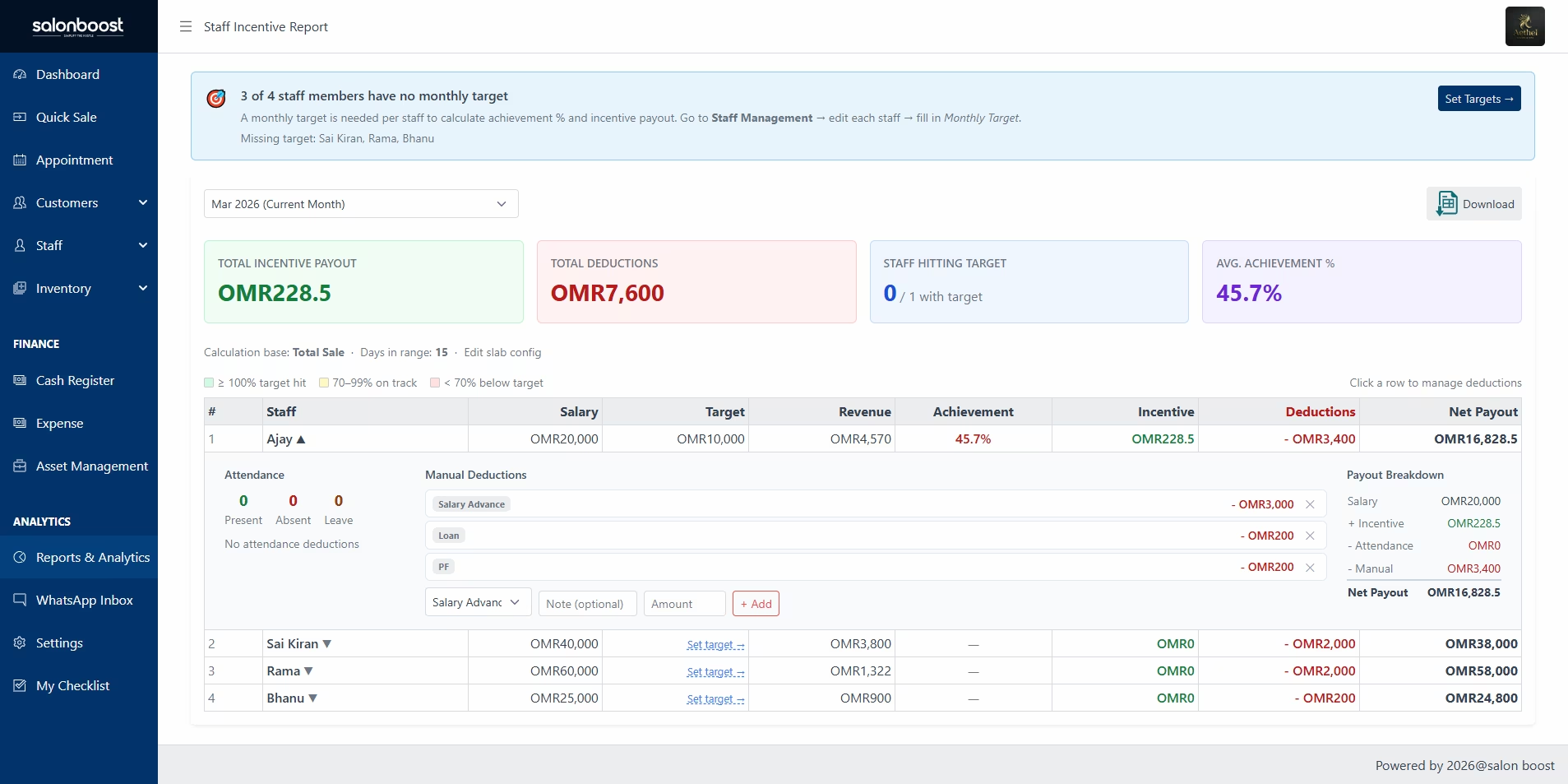
Flat salaries don't motivate top performers. But ad-hoc bonuses without clear rules create resentment and favouritism. The best-performing salons we've seen on SalonBoost use a base salary + transparent performance incentive model where every staff member knows exactly how their pay is calculated.
SalonBoost lets you set up per-service or percentage-based commissions that are auto-calculated on every bill. No manual tracking, no end-of-month guesswork. Here are the three commission structures that work best for Indian salons:
Revenue-Based Incentives
Set a monthly revenue target per stylist. When they exceed it, they earn a percentage or flat bonus on the surplus. This aligns staff interests directly with salon revenue.
Example: Priya has a ₹80,000 monthly target. She hits ₹95,000. She earns 10% on the ₹15,000 surplus = ₹1,500 bonus. She can track her progress in real time through the app.
Per-Service Commission
Assign a flat commission per service type. This works well for high-value services like bridal makeup, hair treatments, or advanced facials where you want to incentivize upselling. SalonBoost tracks each service performed per staff member automatically through the billing system.
Example: ₹100 commission per hair smoothening treatment, ₹50 per premium facial. Auto-added to payroll.
Product Sales Incentives
Encourage retail sales by giving staff a commission on products sold. Product margins are typically 40-60% in salons, so sharing 5-10% with the stylist who recommended it is a strong ROI move.
Example: 5% commission on all product sales. Raj sells ₹12,000 in products this month = ₹600 extra in his pay.
Client Count Incentives
Reward staff for serving more clients. This works particularly well for junior stylists you want to develop — they're motivated to take on more appointments and build their client base.
Example: ₹20 bonus for every client beyond 150 per month. Serves 170 clients = ₹400 bonus.
Pro tip from top-performing salons:
Share incentive progress with staff weekly. When your team sees “You're ₹8,000 away from your bonus target” every Monday, performance goes up noticeably. Transparency drives motivation. SalonBoost lets staff track their own progress in real time through the app, creating healthy competition and self-motivation without owners needing to intervene.
Manual Register vs. SalonBoost: Side-by-Side Comparison
Here's how the old way stacks up against a dedicated staff attendance and payroll system:
| Feature | Paper Register | Biometric Machine | SalonBoost Software |
|---|---|---|---|
| Setup cost | ₹50 (notebook) | ₹8,000-₹25,000 | ₹0 (included in plan) |
| Buddy punching prevention | None | Partial (fingerprints fail) | QR + WiFi + OTP (3 layers) |
| Payroll integration | Manual counting | Manual export needed | Automatic calculation |
| CRM/billing integration | None | None | Full (auto-attendance via billing) |
| Late arrival tracking | Staff writes the time (trust-based) | Timestamp recorded | Timestamp + auto payroll deduction |
| Commission tracking | Not possible | Not possible | Per-service & percentage auto-calc |
| Performance analytics | Not possible | Not possible | Revenue/services/ratings per staff |
| Leave management | Verbal request | Verbal request | In-app request + one-tap approve |
| Monthly effort | 4-8 hours counting | 2-3 hours export + Excel | 5 minutes (auto-generated report) |
| Dispute resolution | “He said, she said” | Fingerprint log (no context) | Timestamped + bill-linked records |
Staff Performance Tracking and Analytics
Attendance and payroll are the foundation. But to truly optimize your team, you need to understand who's performing and who's underperforming — not based on gut feeling, but on data. SalonBoost's analytics and reports module tracks performance at the individual staff level.
Here's what you can see for each staff member:
Revenue per stylist
How much revenue each staff member generates per day, week, and month. Identifies your top earners and those who need coaching or skill development.
Services per day
Average number of clients served and services performed. A stylist averaging 6 clients/day vs. 4 clients/day tells you a lot about efficiency and client demand.
Customer ratings per staff member
If you collect client feedback (which SalonBoost automates), you can see average ratings per stylist. A 4.8-star stylist with consistent 5-star reviews is your retention engine. A 3.5-star stylist may need training.
Client retention per stylist
Which stylists bring clients back? SalonBoost tracks repeat visit rates per staff member, helping you identify who drives customer retention and who might be losing clients.
This data transforms how you manage your team. Instead of generic “work harder” feedback, you can have data-backed conversations: “Priya, your revenue is great but your average client rating dropped from 4.7 to 4.3 this month — let's talk about why.” That's management by data, not guesswork.
Salons using SalonBoost's performance tracking report 20% more repeat visits on average, because staff who know they're being measured on client satisfaction naturally deliver better service.
7 Common Staff Management Mistakes Indian Salons Make
After working with 500+ salons across India, we've seen the same mistakes repeated. Here are the seven most common — and how to avoid each one:
1. No written attendance policy
Many salons operate on verbal understandings. “Everyone knows the shift is 10 AM.” But without a written policy that defines what constitutes late, how many leaves are allowed, and what happens with unapproved absences, disputes are inevitable. Fix: Document your attendance rules and share them with every staff member on Day 1. SalonBoost lets you configure these rules digitally so they're enforced automatically.
2. Ignoring buddy punching because “we trust our team”
Trust is important, but trust doesn't scale. A 3-person salon might not have buddy punching. A 12-person salon almost certainly does. The 2-5% payroll leakage isn't personal — it's systemic. Fix: Use triple-verification attendance that removes the temptation entirely. No one gets blamed; the system simply prevents it.
3. Calculating payroll in Excel or on paper
Manual payroll calculation is slow, error-prone, and creates mistrust. One wrong entry means an underpaid staff member who now doubts every future payslip. Fix: Automate payroll from attendance data so both you and your staff can verify every line item.
4. Flat salaries with no performance incentives
When your top stylist earns the same as someone doing half the work, your top stylist will eventually leave. Flat pay structures create a ceiling that punishes high performers. Fix: Implement transparent commission structures (revenue-based, per-service, or product-sales) so effort directly translates to earnings.
5. Not tracking login AND logout times
Many salons track arrivals but not departures. This creates blind spots around early departures, overtime claims, and actual hours worked. Fix: Record both login and logout timestamps. SalonBoost does this automatically through check-in/check-out or billing activity.
6. No visibility into individual staff performance
If you can't tell which stylist generates the most revenue, which one has the best client retention, and which one is underperforming, you're managing blind. Fix: Use analytics tools that break down performance by staff member with real numbers.
7. Waiting until month-end to address attendance issues
If someone is consistently late by 15 minutes, you won't notice until you count the register at month-end — by which point 30 days of lost productivity have already happened. Fix: Use a real-time dashboard that flags late arrivals and absences as they happen, so you can act immediately.
Staff Management KPIs Every Salon Owner Should Track
You can't improve what you don't measure. Here are the key performance indicators that successful salon owners track monthly — all of which SalonBoost calculates automatically:
| KPI | What It Measures | Target Benchmark |
|---|---|---|
| Attendance rate | % of scheduled days actually worked | 90%+ (with 2-3 leaves/month) |
| On-time rate | % of days staff check in on time | 85%+ is healthy |
| Revenue per stylist | Monthly revenue generated by each staff | ₹60K-₹1.2L (varies by city tier) |
| Services per day | Average daily client count per stylist | 5-8 services/day (full-time) |
| Average ticket size | Average bill value per client per stylist | Track month-over-month growth |
| Client retention rate | % of clients who return within 60 days | 40%+ is strong for salons |
| Staff turnover rate | % of staff leaving per quarter | Under 10% quarterly is good |
| Payroll-to-revenue ratio | Staff costs as % of total revenue | 30-40% is the healthy range |
The most important insight from tracking these KPIs is identifying outliers. If one stylist has a 95% attendance rate but generates 40% less revenue than peers, the problem isn't attendance — it's productivity or skill. If another stylist has the highest revenue but a 3.5-star client rating, they might be rushing through services. The data tells you where to focus your attention.
How SalonBoost makes this easy:
All of these KPIs are calculated automatically from your billing and attendance data. You don't need to create spreadsheets or formulas. Open the analytics dashboard, select the time period, and every metric is there — broken down by staff member, service type, and time period.
ROI: What You Save with Software
Let's do the math for a typical salon with 8 staff members and a monthly payroll of ₹1,60,000:
| Savings Category | Annual Savings |
|---|---|
| Biometric hardware (not needed) | ₹8,000-₹25,000 (one-time) |
| Buddy punching eliminated (2-5% of payroll) | ₹38,400-₹96,000/year |
| Owner time saved (4-8 hrs/month × ₹500/hr) | ₹24,000-₹48,000/year |
| Payroll dispute resolution (fewer errors) | ₹6,000-₹12,000/year |
| Staff retention improvement (lower hiring costs) | ₹15,000-₹30,000/year |
| Total estimated annual savings | ₹91,400-₹2,11,000/year |
| SalonBoost cost (Essential plan) | ₹9,588/year |
The bottom line:
Even at the conservative end of estimates, SalonBoost pays for itself 9-10 times over just from attendance and payroll improvements alone. That's before counting the revenue gains from better appointment management, client retention, and marketing automation.
Stop Losing Money to Attendance Problems
500+ Indian salons use SalonBoost to automate attendance, payroll, and incentives — starting at ₹799/month. Triple-verification attendance, zero payroll errors, and real-time staff analytics. See how it works for your salon.
Related Guides
Staff Attendance & Payroll
Explore all SalonBoost staff management features in detail.
Customer Retention Strategies
How top salons keep clients coming back with data-driven retention.
Salon Billing Software
Commission tracking, auto-billing, and GST invoicing for Indian salons.
Analytics & Reports
Track staff performance, revenue, and salon growth metrics.
Salon Team Training Framework
Kirkpatrick measurement, 5 training domains, and ROI on staff development.

Founder & CEO, SalonBoost
Swetha has helped 500+ Indian salons and spas streamline operations with SalonBoost salon management software. She writes about salon growth strategies, WhatsApp automation, and the Indian beauty industry.