500+
Indian salons on SalonBoost
25-35%
Revenue lift with smart pricing
₹799
Software from / month
60%
Salons underprice services
Why Most Indian Salons Underprice Their Services
Walk through any market in Bangalore, Pune, or Jaipur and you'll see the same pattern: salons offering men's haircuts for ₹100-₹200, women's hair smoothening for ₹2,500 when it costs them ₹1,800 in products alone, and “combo offers” that barely break even.
The average salon bill in India ranges from ₹500-₹1,500 for men and ₹800-₹3,000 for women — numbers that haven't kept pace with inflation, rising rent, or increasing product costs. Salon owners leave lakhs on the table every year because of three common traps:
The Three Underpricing Traps:
- Fear of losing clients: “If I charge more, they'll go next door.” In reality, clients who leave over a ₹50 price increase were never loyal — and they cost you more in time than they generate in profit.
- No data on actual costs: Most salons don't track per-service cost breakdowns. They know their monthly rent and salary bill, but not what a single haircut actually costs them to deliver.
- Competitor copying: Setting prices based on what the salon across the street charges — without knowing if that salon is profitable or bleeding money.
The fix isn't complicated. It starts with understanding what each service actually costs you, then building a pricing structure that reflects your value, not your fear. Let's walk through each strategy step by step.
Cost-Plus Pricing: Know Your True Service Cost
Before you can price strategically, you need to know your floor price — the minimum you can charge without losing money. Most salon owners skip this step, which is why they accidentally run loss-making services for years.
Here's a detailed cost breakdown for a common service: women's hair smoothening in a tier-2 city salon with 4 chairs and 6 staff.
| Cost Component | Amount | How to Calculate |
|---|---|---|
| Product cost (keratin, serum) | ₹600 | Track per-service usage from inventory |
| Staff time (2.5 hrs at ₹200/hr) | ₹500 | Monthly salary / working hours |
| Chair rent (per 2.5 hrs) | ₹250 | Monthly rent / chairs / operating hours |
| Electricity + AC (per service) | ₹80 | Monthly bill / total services performed |
| Equipment depreciation | ₹40 | Straightener/dryer cost / lifespan in services |
| Towels, cape, consumables | ₹30 | Monthly consumable spend / services |
| Total Cost Per Service | ₹1,500 | This is your floor price |
If you're charging ₹2,500 for this service, your margin is ₹1,000 (40%). If you're charging ₹1,800 — which many tier-2 city salons do — your margin is only ₹300 (16.7%). That's not enough to cover your profit, GST, or unexpected expenses.
The Cost-Plus Formula:
Service Price = Total Cost + (Total Cost x Desired Margin %)
For a 50% margin: ₹1,500 + (₹1,500 x 0.50) = ₹2,250 minimum
For a 65% margin: ₹1,500 + (₹1,500 x 0.65) = ₹2,475 (round to ₹2,499)
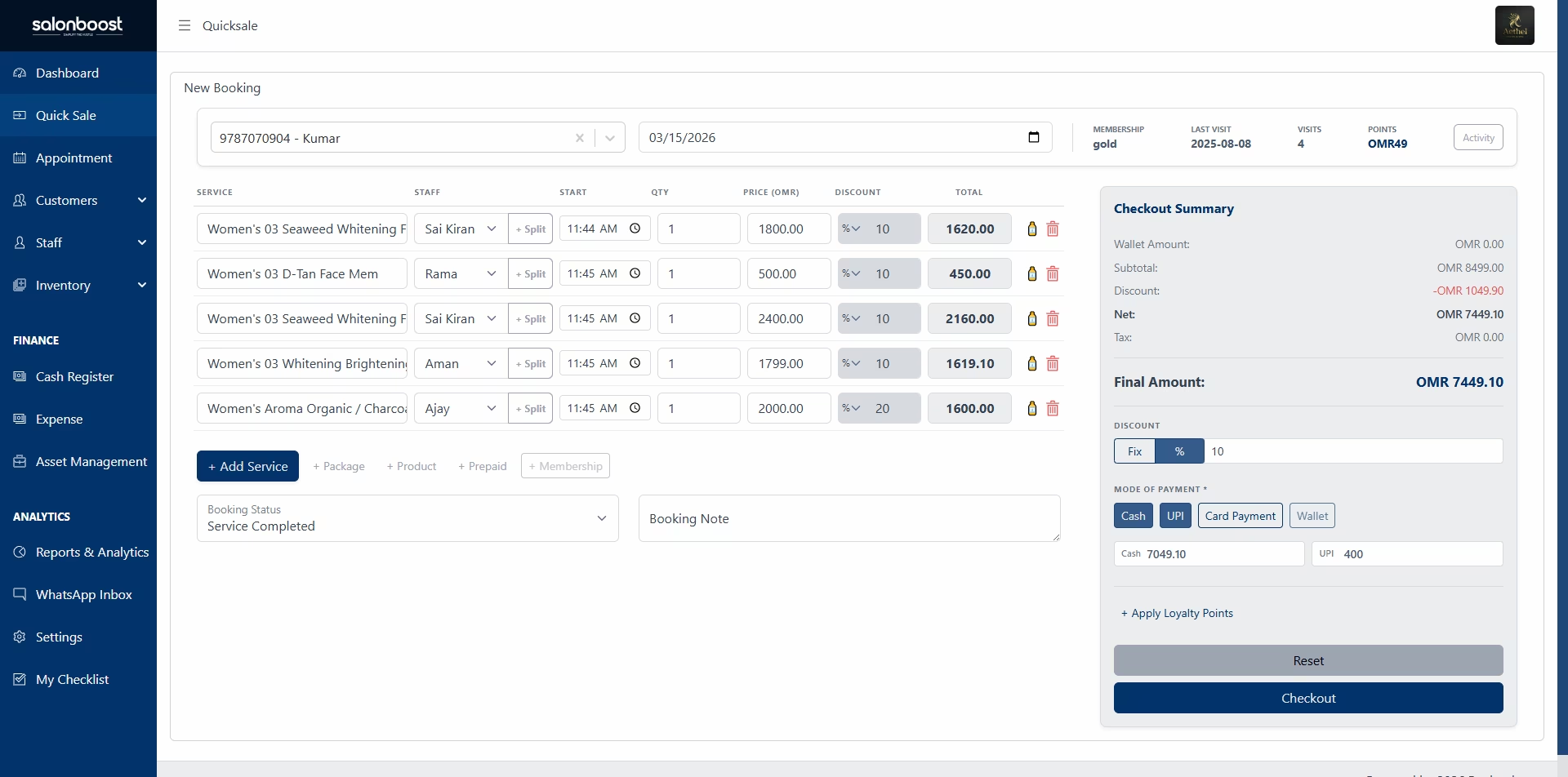
SalonBoost's billing system automatically tracks product usage per service and links it to your inventory costs, giving you real-time cost-per-service data instead of guesswork.
Value-Based Pricing: Charge for Expertise, Not Just Time
Cost-plus pricing sets your floor. Value-based pricing sets your ceiling — and that ceiling can be much higher than you think.
A women's haircut takes roughly the same amount of time whether a junior stylist or a senior stylist does it. But clients will pay 2-3x more for the senior stylist. Why? Because they're not paying for 30 minutes of cutting — they're paying for the confidence that they'll look great.
Value-based pricing works by identifying what clients actually value and pricing accordingly:
- Stylist expertise: Senior stylists with 10+ years of experience or training certifications should command premium rates. Create stylist-level pricing tiers.
- Product quality: Offer the same service with standard products vs. premium brands (L'Oreal Professional vs. Schwarzkopf vs. Olaplex). Each tier has a different price point.
- Experience and ambiance: Head massage, hot towel, complimentary beverage, and a longer consultation time transform a ₹500 haircut into a ₹1,200 experience.
- Convenience and exclusivity: Home visits, after-hours appointments, or private cabin services justify 40-60% premium pricing.
Real-World Example:
A salon in Indore switched from a flat ₹400 haircut price to three tiers: Junior Stylist (₹350), Senior Stylist (₹550), and Creative Director (₹800). Result: average ticket increased by 38% because most clients chose the Senior tier — the middle option feels “safe.” Total revenue went up without serving more clients.
Tiered Service Packages: Good, Better, Best
Tiered pricing is the most powerful pricing structure for Indian salons. It uses the anchoring effect — when you present three options, most people choose the middle one. The luxury tier makes the premium tier look reasonable, and the basic tier makes clients feel they're “getting more” by choosing premium.
Here's a tiered pricing example for a bridal package — one of the highest-margin services for Indian salons:
| Feature | Basic ₹8,000 | Premium ₹15,000 | Luxury ₹25,000 |
|---|---|---|---|
| Bridal makeup | Yes | Yes | Yes |
| Hair styling | Basic bun | Advanced | Custom design |
| Draping | — | Yes | Yes |
| Pre-bridal facial | — | 1 session | 3 sessions |
| Nail art | — | — | Yes |
| Trial session | — | Yes | Yes |
| Products used | Standard | MAC / Huda | Charlotte Tilbury |
| Your cost | ~₹3,200 | ~₹5,500 | ~₹8,000 |
| Margin | 60% | 63% | 68% |
Notice that the Luxury tier has the highest margin percentage. This is intentional — premium clients are less price-sensitive, so your markup can be higher. Even if only 15% of brides choose Luxury, it disproportionately boosts your overall profitability.
Bundle Pricing Strategies That Increase Average Ticket
Bundling works because of the perceived savings effect. Clients feel they're getting a deal, even when you're maintaining or improving your margins. The key is bundling high-margin services with lower-margin ones so the overall bundle is more profitable than individual sales.
Here are three bundle strategies that work well for Indian salons:
Weekend Glow Package
- Facial cleanup (₹800)
- Eyebrow threading (₹100)
- Upper lip wax (₹80)
- Manicure (₹400)
Individual total: ₹1,380
Bundle: ₹1,099
Your cost: ₹480 | Margin: 56%
Men's Grooming Combo
- Haircut + styling (₹400)
- Beard trim + shape (₹200)
- Head massage (₹300)
- Face wash (₹150)
Individual total: ₹1,050
Bundle: ₹799
Your cost: ₹310 | Margin: 61%
Hair Transformation
- Hair spa (₹1,200)
- Global colour (₹3,500)
- Trim + blow-dry (₹600)
- Olaplex treatment (₹800)
Individual total: ₹6,100
Bundle: ₹4,999
Your cost: ₹2,100 | Margin: 58%
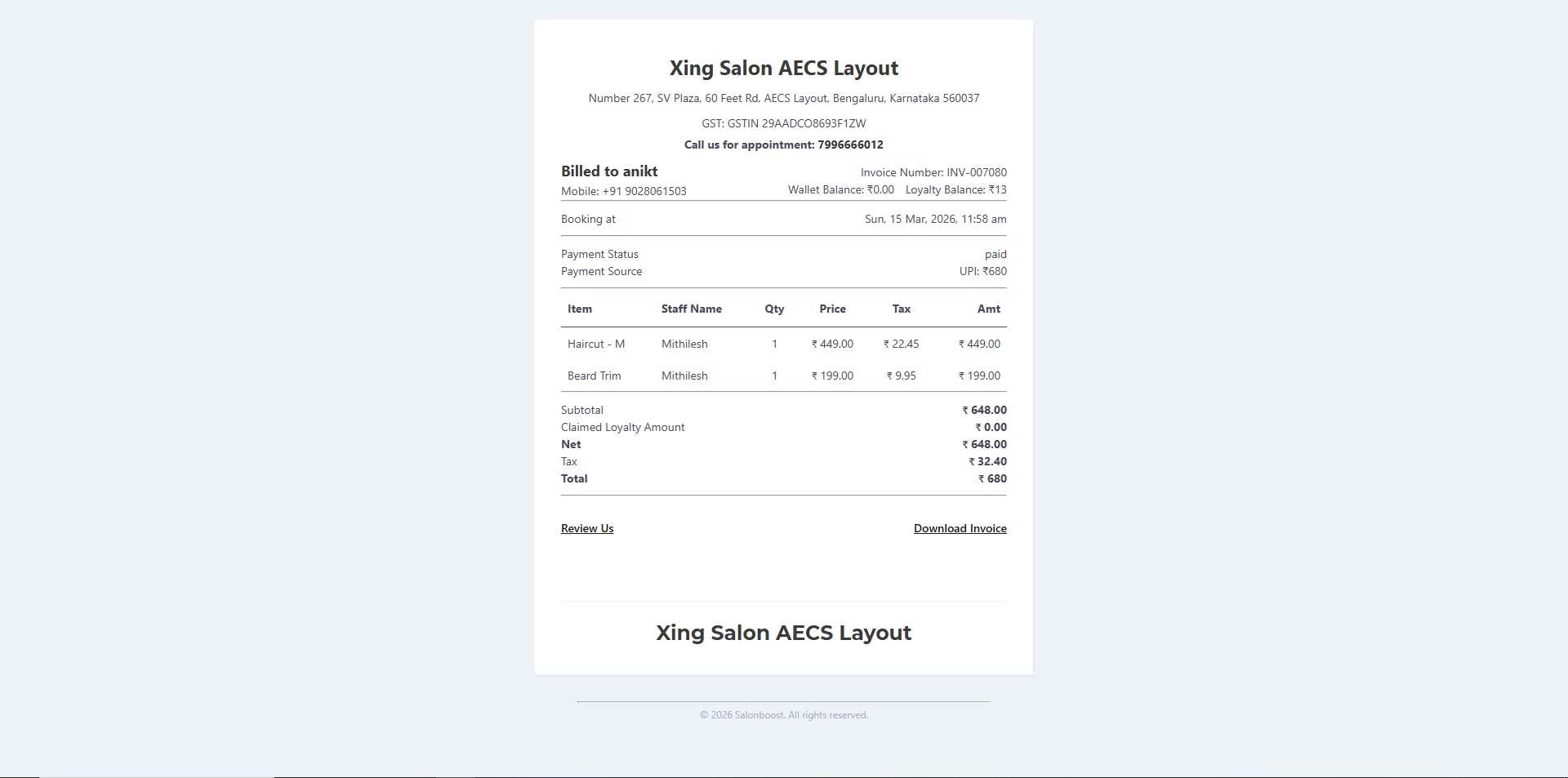
Pro tip: The services you add to bundles (head massage, face wash) are often near-zero cost items. They increase perceived value without meaningfully increasing your costs. SalonBoost's billing software lets you create and manage service packages with automatic bundle pricing applied at checkout.
Dynamic Pricing: Peak vs. Off-Peak Strategy
Every salon has the same problem: packed on Saturday evenings, empty on Tuesday mornings. Dynamic pricing solves this by charging more when demand is high and offering incentives when chairs are empty.
Unlike restaurants or airlines, most Indian salons still use flat pricing. This is a missed opportunity. Here's how to structure time-based pricing:
| Time Slot | Pricing Strategy | Example (Haircut) | Why It Works |
|---|---|---|---|
| Mon-Thu 10am-1pm | Off-Peak (-15%) | ₹340 | Fills empty chairs, attracts price-sensitive clients |
| Mon-Thu 1pm-7pm | Standard | ₹400 | Your baseline price |
| Fri-Sat all day | Peak (+20%) | ₹480 | High demand justifies premium |
| Festival season | Surge (+30-40%) | ₹520-560 | Diwali, weddings — extreme demand |
Implementation Tip:
Don't frame off-peak pricing as a “discount.” Instead, call it “Happy Hours” or “Early Bird Special” — this positions it as a benefit for smart clients, not a sign that you're desperate. And frame peak pricing as “premium time slots” with guaranteed availability.
Membership Models for Predictable Revenue
Monthly memberships give you what every salon owner craves: predictable, recurring revenue. Even if you have a slow week, membership income keeps coming in. And members visit more frequently, spend more per visit, and refer more friends.
Here's a membership structure that works for mid-tier Indian salons:
Silver
₹999/mo
- 2 haircuts/month
- 10% off all services
- Priority booking
Value if redeemed: ₹1,200+
Gold
₹1,999/mo
- 2 haircuts + 1 facial/mo
- 15% off all services
- Free head massage with every visit
- Birthday month: 25% off
Value if redeemed: ₹3,100+
Platinum
₹3,999/mo
- Unlimited haircuts
- 1 facial + 1 spa/month
- 20% off all services
- Free products (shampoo, serum)
- Family member: 10% off
Value if redeemed: ₹6,500+
The math: If you have 30 Gold members, that's ₹59,970 in guaranteed monthly revenue before a single walk-in comes through the door. Even accounting for service delivery costs (~₹800/member/month), you're generating ₹35,970 in monthly profit from memberships alone.
Track membership redemptions and renewals through SalonBoost's marketing and loyalty features. The system automatically applies membership discounts at billing and sends renewal reminders via WhatsApp.
Psychological Pricing Tactics That Work in India
Pricing is as much psychology as it is math. These tactics are proven to influence buying decisions — and they're especially effective in the Indian salon context where clients are value-conscious but not purely price-driven.
1Charm Pricing (₹999 vs ₹1,000)
Charm pricing works because people read left-to-right. ₹999 feels like “nine hundred something” while ₹1,000 feels like “a thousand.” The ₹1 difference is negligible to your margins but significant to perception. Use ₹999, ₹1,499, ₹2,499 instead of round numbers for all mid-to-high value services.
2Anchoring (Show the Expensive Option First)
When your price menu shows the Platinum hair spa at ₹3,500 first, the Gold hair spa at ₹1,800 looks like a bargain by comparison. Always list services from most expensive to least expensive on your menu board, website, and app. This anchors the client's perception of “normal” pricing higher.
3Decoy Pricing (The Compromise Effect)
Add a third option that makes your target option look like the best deal. If you offer Basic Facial (₹600) and Premium Facial (₹1,200), add a “Deluxe Facial” at ₹1,800 that includes only marginally more. Most clients will pick the Premium — it looks like the smart choice between “too basic” and “too expensive.”
4Price Framing (Per-Visit vs. Total)
“₹2,999 for 3 months of unlimited haircuts” sounds expensive. “Just ₹250 per haircut” sounds like a steal — even though it's the same offer. Always break membership and package prices down to per-visit or per-service costs when presenting to clients.
5Loyalty Points Instead of Discounts
Never give a flat “20% off” — it trains clients to expect discounts forever. Instead, offer loyalty points worth the equivalent amount. A ₹200 discount is gone. ₹200 in loyalty points brings the client back for another visit. Read our full loyalty program guide for implementation details.
How to Raise Prices Without Losing Clients
Raising prices is the single most impactful thing you can do for profitability — and the most feared. A 10% price increase on a salon doing ₹3 lakh/month adds ₹30,000 to revenue with zero additional work. Here's a step-by-step process that minimizes client pushback:
Audit your costs first
Use SalonBoost analytics to identify which services have margins below 40%. These are your priority services for price increases.
Increase gradually (5-10% per quarter)
A ₹50 increase on a ₹500 service is barely noticed. A ₹150 jump triggers comparison shopping. Small, regular increases compound — ₹50 every quarter = ₹200/year.
Add value with the increase
When raising your facial price from ₹800 to ₹900, add a complimentary under-eye treatment (costs you ₹20). The client perceives a better service, not a higher price.
Grandfather loyal clients
Give your top 20 clients a 30-day grace period at old prices. This builds loyalty and prevents your best clients from feeling blindsided.
Communicate with confidence
"We've upgraded our products and invested in advanced training for our team" is better than "Sorry, we had to increase prices due to rising costs." Frame the increase around value, not cost.
Update your price list everywhere simultaneously
Menu board, website, Google Business Profile, booking app, and front desk — update all on the same day. Inconsistent pricing destroys trust.
Track the impact for 60 days
Monitor appointment volume, revenue, and client retention after the increase. In most cases, you'll lose 2-5% of price-sensitive clients but gain 10%+ in revenue.
Using Analytics for Data-Driven Pricing Decisions
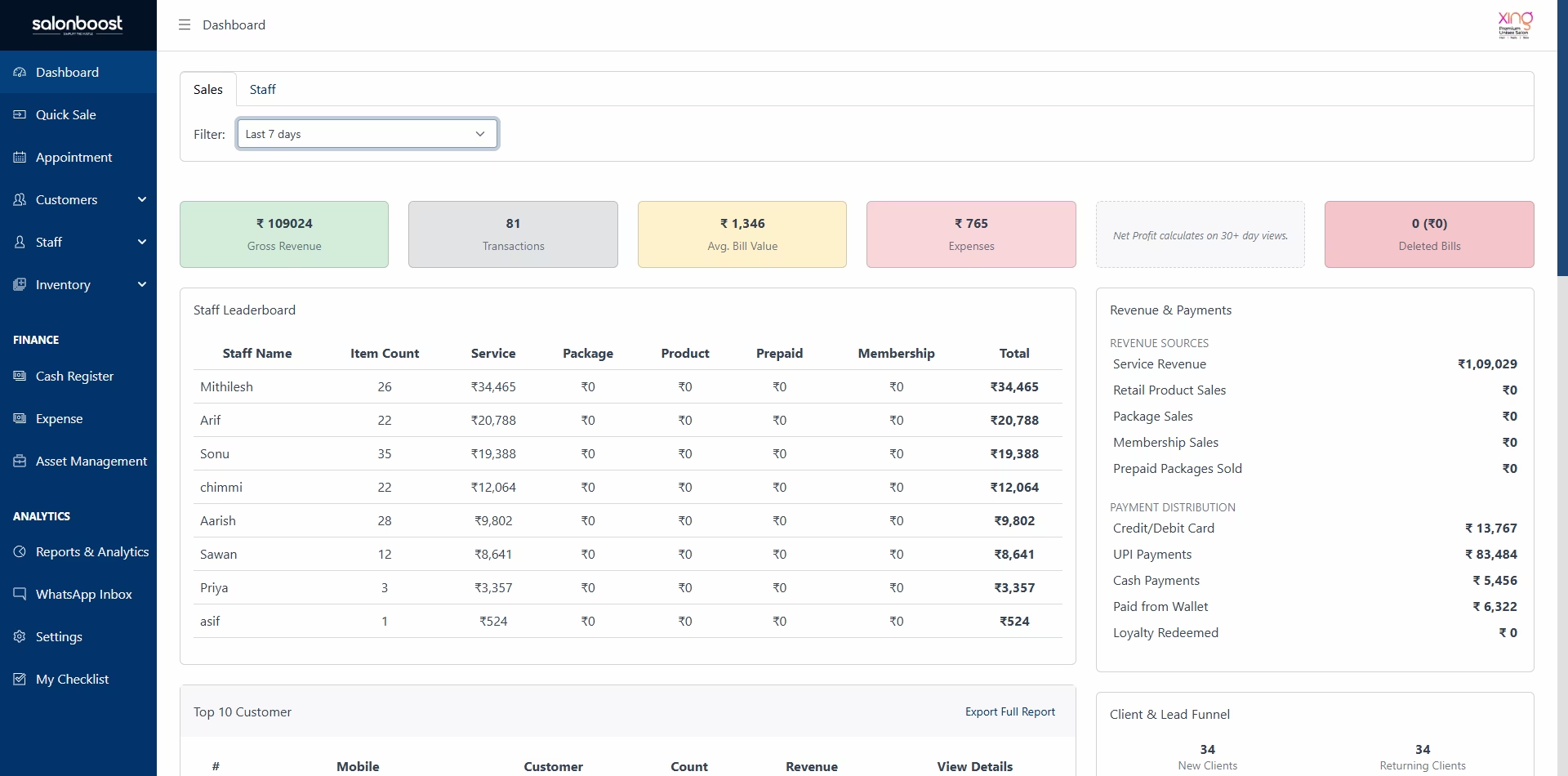
Guessing which services to reprice is expensive. Data tells you exactly where the opportunities are. SalonBoost's analytics dashboard gives you the numbers you need for smart pricing decisions:
- Revenue by service: Which services generate the most revenue? High-revenue services with low margins are prime candidates for price increases.
- Service frequency: Services booked 50+ times/month have proven demand — you can raise prices with minimal volume loss.
- Peak time analysis: Which time slots are fully booked 2+ days in advance? These slots can support premium pricing.
- Staff productivity: Which stylists generate the highest revenue per hour? Their services should be priced at the top of your range.
- Product usage vs. billing: If a service uses ₹600 in products but you're charging ₹1,200, your product cost ratio is 50% — well above the 25-30% healthy benchmark.
Real Impact:
A salon in Hyderabad discovered through SalonBoost analytics that their hair spa service (₹800) was their second most-booked service but had only a 28% margin. They increased it to ₹999, added a free hair serum sample (cost: ₹30), and saw zero drop in bookings over 90 days. Monthly revenue from that service alone went up by ₹15,920.
12 Common Pricing Mistakes Indian Salons Make
Mistake: Pricing all haircuts the same regardless of stylist level
Fix: Create stylist-tier pricing (Junior/Senior/Creative Director)
Mistake: Offering flat 20% discounts to attract clients
Fix: Use loyalty points instead — they guarantee a return visit
Mistake: Not updating prices for 2+ years
Fix: Review and adjust every 6 months based on costs and demand
Mistake: Copying the salon next door's prices
Fix: Calculate your actual costs — their cost structure may be completely different
Mistake: Charging the same on weekdays and weekends
Fix: Implement peak/off-peak pricing (15-20% differential)
Mistake: Using round numbers (₹500, ₹1,000)
Fix: Use charm pricing (₹499, ₹999) for better conversion
Mistake: Discounting during festivals instead of charging more
Fix: Festivals = peak demand. Offer bundles at premium, not discounts
Mistake: Not including GST in displayed prices
Fix: Show GST-inclusive prices to avoid bill shock at checkout
Mistake: Free services for friends and family without tracking
Fix: Track every free service as a cost — it's a business expense
Mistake: No difference between product tiers
Fix: Offer standard vs. premium product options at different price points
Mistake: Pricing new services too low to 'test'
Fix: Launch at full price with an introductory period discount (max 10%)
Mistake: Not displaying prices at all ("pricing on request")
Fix: Transparent pricing builds trust and filters clients before they walk in
GST-Compliant Pricing and Invoicing
Pricing strategy only works if your invoicing supports it. Indian salons need GST-compliant bills that correctly reflect service prices, package discounts, membership credits, and tax breakdowns. Common invoicing pitfalls that hurt your pricing strategy:
- Bill shock: Showing ₹500 on the menu and then charging ₹525 with GST surprises clients. Always set menu prices as GST-inclusive.
- Bundle confusion: Invoices should show the individual service values, the bundle discount applied, and the final amount. This reinforces the perceived savings.
- Membership tracking: Digital invoicing should automatically deduct membership benefits and show remaining balance for the month.
- Product vs. service separation: GST rates differ for products (own HSN rates, commonly 5–18%) and services (5% without ITC since September 2025). Your billing system must handle both correctly.
SalonBoost's billing software generates GST-compliant invoices automatically, supports flexible pricing for packages and memberships, and gives you a complete financial trail for ITR filing.
Your Pricing Action Plan: Start This Week
You don't need to implement every strategy at once. Here's a phased approach that any Indian salon can follow:
Week 1: Cost Audit
Calculate the true cost for your top 10 services. Identify any services priced below cost-plus-40% margin. Set up SalonBoost billing to track product usage per service.
Week 2: Tier and Bundle
Create 2-3 service bundles and at least one tiered package (Good/Better/Best). Update your price menu with charm pricing (₹X99 endings).
Week 3: Dynamic Pricing
Introduce off-peak “Happy Hour” pricing for Monday-Thursday mornings. Test peak pricing on Friday-Saturday at 15-20% premium.
Week 4: Membership Launch
Launch a simple 2-tier membership. Offer your 20 most loyal clients early access at a founding-member rate. Track sign-ups and redemptions through SalonBoost.
Month 2+: Optimize with Data
Use your revenue dashboard to track what's working. Double down on high-margin bundles, adjust underperforming tiers, and plan your first price increase on high-demand services.
Salons that implement these strategies systematically see average revenue increases of 25-35% within six months — without adding a single new client. For more revenue growth strategies beyond pricing, read our complete salon revenue growth guide.
Ready to Optimize Your Salon Pricing?
500+ Indian salons use SalonBoost for GST-compliant billing, service packages, revenue analytics, and loyalty programs. Get the data you need to price with confidence. Plans start at ₹799/month — no lock-in contract.
Founder & CEO, SalonBoost
Swetha has helped 500+ Indian salons and spas streamline operations with SalonBoost salon management software. She writes about salon growth strategies, WhatsApp automation, and the Indian beauty industry.