
A salon welcome experience is everything that happens between the moment a client walks through your door and the moment their service begins. It includes the greeting, the wait, the environment, and the handoff to their stylist. Most salon owners focus heavily on service quality and almost not at all on this window — which is a mistake, because the welcome experience shapes how every client perceives everything that follows.
Why Do the First 5 Minutes Decide Whether a Client Returns?
Clients form their emotional impression of a salon within the first few minutes of arrival — before a single service has been performed. If that impression is positive (they felt seen, valued, and at ease), they are primed to enjoy the experience. If it is negative (they were ignored, confused about where to sit, or made to wait without acknowledgement), they are already on edge before the stylist touches their hair. A technically excellent service can recover from a poor welcome, but it has to work harder to do so. In a competitive market where Indian clients have multiple salon options within walking distance, a warm and professional welcome is one of the easiest differentiators to build — and one of the least invested in.
How Should a Salon Prepare Before a Client Arrives?
The welcome experience starts before the client walks in. Using your appointment management system, front-desk staff should review the day's bookings each morning and flag any clients with special notes — first-time visitors, clients who had an issue on a previous visit, regulars with specific preferences, or clients booked for longer services. A client who is greeted by name without having to introduce themselves, or whose preferred stylist is visibly ready for them, experiences a level of personalisation that most salons never deliver. This preparation takes five minutes per day and creates a disproportionate impression of professionalism.
What Is the Right Way to Greet a Salon Client in India?
Acknowledge every client within 30 seconds of their arrival — even if you are busy with another client. A brief "Welcome, we'll be right with you" prevents the most common welcome failure: a client standing at the entrance feeling invisible. For clients with appointments, use their name if you know it. For walk-ins, introduce yourself before asking what they need. In Indian salons, where a significant portion of clients arrive for services spanning two or more hours (keratin treatments, bridal packages, full-body spa sessions), the warmth of the initial greeting sets expectations for the entire visit. Offer water or chai within the first few minutes — this is both a hospitality gesture and a cue that the client is settled and not waiting in a queue. In regional markets particularly, greeting in the local language when possible signals community and care.
How Does the Waiting Environment Affect Client Perception?
The waiting area is not downtime — it is active marketing. A client sitting in your reception for ten minutes is reading your prices, noticing whether products are organised, watching how your staff interact with each other, and forming opinions about cleanliness. The environment should be deliberately managed. Lighting should be warm and even — harsh fluorescent lights in a reception area signal a clinical rather than luxurious experience. Music should be audible but not intrusive, and genre-appropriate to your positioning (curated playlists work better than a radio station with unexpected ads). If you stock retail products, the reception area is the right place to display hero products with legible price tags. Magazines should be current — a pile of year-old publications signals that nobody is paying attention to detail. Scent matters: a salon should smell clean and faintly fragrant, not overwhelmingly like product. These are all controllable with minimal cost.
How Do WhatsApp Pre-Arrival Messages Improve the Welcome Experience?
The welcome experience can begin hours before the client arrives. A pre-appointment WhatsApp message sent the evening before — or the morning of a same-day appointment — serves two purposes: it confirms the appointment (reducing no-shows) and it can include practical information that reduces client anxiety on arrival. Details like parking instructions, the stylist's name, how long the service takes, and what to bring or avoid (e.g., avoid hair oiling before a treatment) all make the client feel guided rather than dropped into an unknown experience. With WhatsApp automation, these messages send automatically at the right time without requiring a staff member to remember. Clients who receive these messages arrive more relaxed, ask fewer administrative questions on entry, and move to the service chair faster.
What Do First-Time Clients Specifically Need When They Walk In?
First-time clients carry more uncertainty than returning clients. They do not know where to sit, whether to hang up their coat, which stylist is theirs, or how long they might wait. Eliminating this uncertainty is the job of the welcome. Assign someone to specifically manage first-time client arrivals during peak hours. Give them a brief orientation: where to sit, who will be taking care of them, approximately when they will start. Offer to take their bags or coat. Show them where the washroom is. If they booked online and filled out a consultation form, acknowledge it: "I saw you mentioned you're interested in a colour change — your stylist will go through that with you." This signals that their information was read and valued, not lost in a system. First-time clients who feel cared for in this way are dramatically more likely to rebook before they leave.
How Do You Train Staff to Deliver a Consistent Welcome Across All Shifts?
A great welcome experience that depends on one receptionist is fragile. When that person is off, on leave, or replaced, the experience collapses. Consistency comes from written protocols that any staff member can follow. Document the welcome script (not a word-for-word script, but the key moments and phrases that must happen), the preparation checklist (what to review before the day starts), and the environment checklist (what the reception area should look like at opening). Train every front-of-house team member to the same standard. Role-play difficult scenarios — what to say when a client arrives and their stylist is running 20 minutes late, how to handle a walk-in when you are fully booked. Review client satisfaction data monthly and trace any patterns of negative feedback back to the welcome process.
How Do You Manage Wait Times Without Damaging the Experience?
Waiting is the most common trigger of a poor welcome experience. The issue is rarely the wait itself — it is the unacknowledged wait. A client who is told "your stylist will be with you in about 15 minutes" and offered something to drink will tolerate a 20-minute wait with equanimity. A client who is not told anything and watches time pass with no update becomes agitated after 5 minutes. Train staff to give proactive time estimates and update clients if a wait is extending. During festival season or peak periods — Diwali, weddings, school holidays — build buffer time into the schedule using your booking system rather than stacking appointments back-to-back. A schedule that is optimistic on paper will undermine your welcome experience every Saturday.
How Do You Measure Whether Your Welcome Experience Is Working?
The clearest indicator of welcome experience quality is your first-visit-to-rebook rate: the percentage of new clients who book a second appointment. If that number is below 40%, the welcome experience is a likely contributing factor. Post-visit WhatsApp messages can include a one-question feedback prompt: "How was your arrival experience today?" — a simple rating that gives you signal without friction. Review your Google reviews and look for any mention of waiting, reception, or arrival — both positive and negative comments in this area are direct feedback on your welcome. Monitor whether returning clients come back on time or start arriving late — chronic late arrivals are often a sign that the client does not value the arrival experience, which usually traces back to how they felt the first time.
Welcome Experience Checklist
- ✓ Review the day's bookings and flag special notes before opening
- ✓ Acknowledge every client within 30 seconds of arrival
- ✓ Send a WhatsApp pre-arrival message with appointment details
- ✓ Offer water or chai within 2 minutes of seating
- ✓ Give first-time clients a 30-second orientation
- ✓ Always give a proactive wait time estimate — never leave clients guessing
- ✓ Audit reception area environment at the start of each day
Ready to Build a Welcome Experience That Wins Clients?
SalonBoost gives you automated pre-arrival WhatsApp messages, client history at your fingertips, and appointment management that keeps your schedule running on time. Starting at ₹799/month.
Related Guides
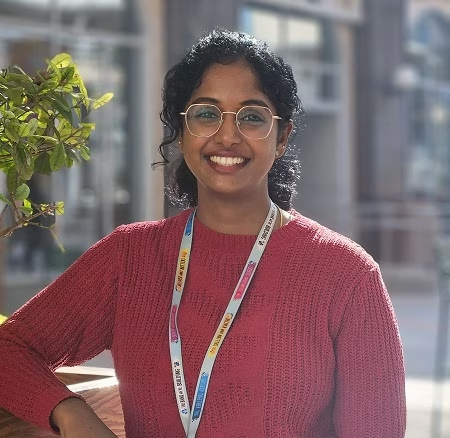
Founder & CEO, SalonBoost
Swetha has helped 500+ Indian salons and spas streamline operations with SalonBoost salon management software. She writes about salon growth strategies, WhatsApp automation, and the Indian beauty industry.