15-25%
Product waste reduced
500+
Indian salons on SalonBoost
2-3 hrs
Saved weekly on vendor POs
₹799
Software from / month
The Hidden Cost of Poor Inventory Management
Inventory is the second-largest expense in any salon — right after staff salaries. Yet most salon owners in India treat it as an afterthought. They order products when they “feel” stock is low, mix up retail and professional products on the same shelf, and discover expired tubes at the back of the cupboard months too late.
The result? Industry research consistently shows that salons lose 15–25% of their product investment to inventory shrinkage — a combination of product waste, theft, over-ordering, and stockouts that force clients to walk out empty-handed.
For a salon doing ₹3,00,000 per month in revenue with a typical 30% product cost ratio, that means ₹90,000 going to product purchases every month — and ₹13,500 to ₹22,500 of that is being wasted. Over a year, you're looking at ₹1.6–2.7 lakh in pure product waste. That's money that should have been profit but instead went to the bin, the drain, or someone's handbag.
The Five Revenue Killers in Indian Salons
Expired Products on the Shelf
Hair colours, keratin serums, and skincare products expire quietly on back shelves. A single expired professional colour kit costs ₹800–₹2,000. Multiply that by 5–10 expired items per month and you're looking at ₹4,000–₹20,000 in waste.
Colour & Product Over-Usage
Stylists mix excess colour, use 80g when 50g was enough, or discard half-used tubes because there's no system tracking actual consumption. Without per-service tracking, you never know how much is used vs. wasted.
Stockouts at Peak Hours
Running out of a popular shampoo or hair colour during a Saturday rush means lost revenue and embarrassed staff. Clients rarely come back after hearing “sorry, we don't have that product right now.”
Staff Pilferage & Shrinkage
Nobody wants to talk about this, but without automated tracking, there's no way to know if that bottle of shampoo was used for services or walked out the door. Even trusted staff can develop habits that quietly drain your margins.
Over-Ordering & Dead Stock
Without consumption data, you rely on gut feeling for reorders. The result: cupboards full of products that barely move, tying up cash flow that could be used for marketing or staff incentives.
Proper inventory management isn't just about knowing what's on your shelf — it's about protecting your margins, reducing waste, and making sure you never turn a client away because you ran out of a ₹50 product.
Common Inventory Problems in Indian Salons
After working with 500+ salon owners across India — from single-chair barbershops in tier-2 cities like Hubli and Coimbatore to premium multi-branch salon chains in Bangalore and Mumbai — we've seen the same inventory problems repeat everywhere. Here are the five most common ones:
1Notebook & Excel Tracking
The most common “system” in Indian salons is a register at the front desk. Stock comes in, someone writes it down. Stock goes out during services — nobody writes it down because it's a busy Saturday. Excel sheets are slightly better but get abandoned within weeks. During peak hours, no staff member is going to open a spreadsheet and update product quantities after every haircut. The data drifts further from reality each day until the register becomes fiction.
2No Retail vs. Professional Product Separation
Professional products (salon-grade colour, treatments, developer) should never be sold directly to clients — they have different pricing, margins, and usage patterns. But without proper categorization, staff sometimes accidentally sell professional stock at retail prices, or worse, run out of professional stock because it was sold off the shelf. A ₹350 professional colour tube sold at the ₹200 retail rate means you lose ₹150 on the spot — and then have no stock for the next colour appointment.
3Colour Waste & Unmeasured Usage
Hair colour is the highest-cost consumable in most salons. A stylist doing a global colour might use 30g, 50g, or 80g depending on hair length and density — but without per-service tracking, you have no idea how much colour is actually being used versus wasted. We've seen salons where one stylist used nearly double the colour per service compared to their colleagues. Over a month, that single person's over-usage added up to ₹12,000 in unnecessary product cost.
4Vendor Communication Chaos
Reordering typically means calling or WhatsApping 3–5 different vendors, dictating product names and quantities from memory, and hoping the order is correct. There is no purchase order trail, no payment tracking, and no way to verify what was actually delivered versus what was ordered. When a vendor short-delivers 2 tubes of colour out of 20, nobody notices until it's too late. This costs the average salon 2–3 hours every single week in vendor calls and follow-ups.
5No Seasonal Planning
Indian salons have dramatic demand swings tied to wedding season, Diwali, Navratri, Valentine's Day, and summer holidays. Without historical consumption data, most owners either over-order (tying up cash in dead stock) or under-order (losing clients during the busiest weeks of the year). A salon that stocks 20 units of bridal makeup kits for December wedding season when they actually need 50 will turn away 30 brides — each worth ₹5,000–₹15,000 in service revenue.
Auto-Deduction: How It Works
Auto-deduction is the single feature that makes the biggest difference for salon owners who switch to SalonBoost salon software. Instead of manually tracking every product used for every service, the system does it automatically at checkout. Zero manual work, zero missed entries.
Here's the step-by-step workflow:
Example: Client Books a Keratin Treatment (₹3,500)
Step 1: Client checks in for a Keratin Treatment service. The appointment is marked as “in progress.”
Step 2: Stylist completes the treatment and moves to the billing screen to check the client out.
Step 3: SalonBoost automatically shows linked products: Keratin Serum (default: 10ml), Clarifying Shampoo (default: 15ml), Heat Protectant (default: 5ml).
Step 4: Stylist confirms the default quantities or adjusts them (e.g., used 12ml serum instead of 10ml because of long hair).
Step 5: Bill is generated, payment collected, and inventory is auto-deducted. No register, no Excel, no forgetting.
For dynamic-usage products like hair colour, the system doesn't assume a fixed amount. The stylist enters the exact grams used — 30g for a root touch-up, 50g for a partial colour, 80g for a full global colour. This gives you per-service product cost data that's accurate to the gram.
Over time, this data reveals powerful patterns: which stylist uses the most colour, which services consume the most product, and whether your service pricing actually covers your real product costs. Many salon owners discover that their “profitable” colour service was actually losing money once they saw the true product cost per service.
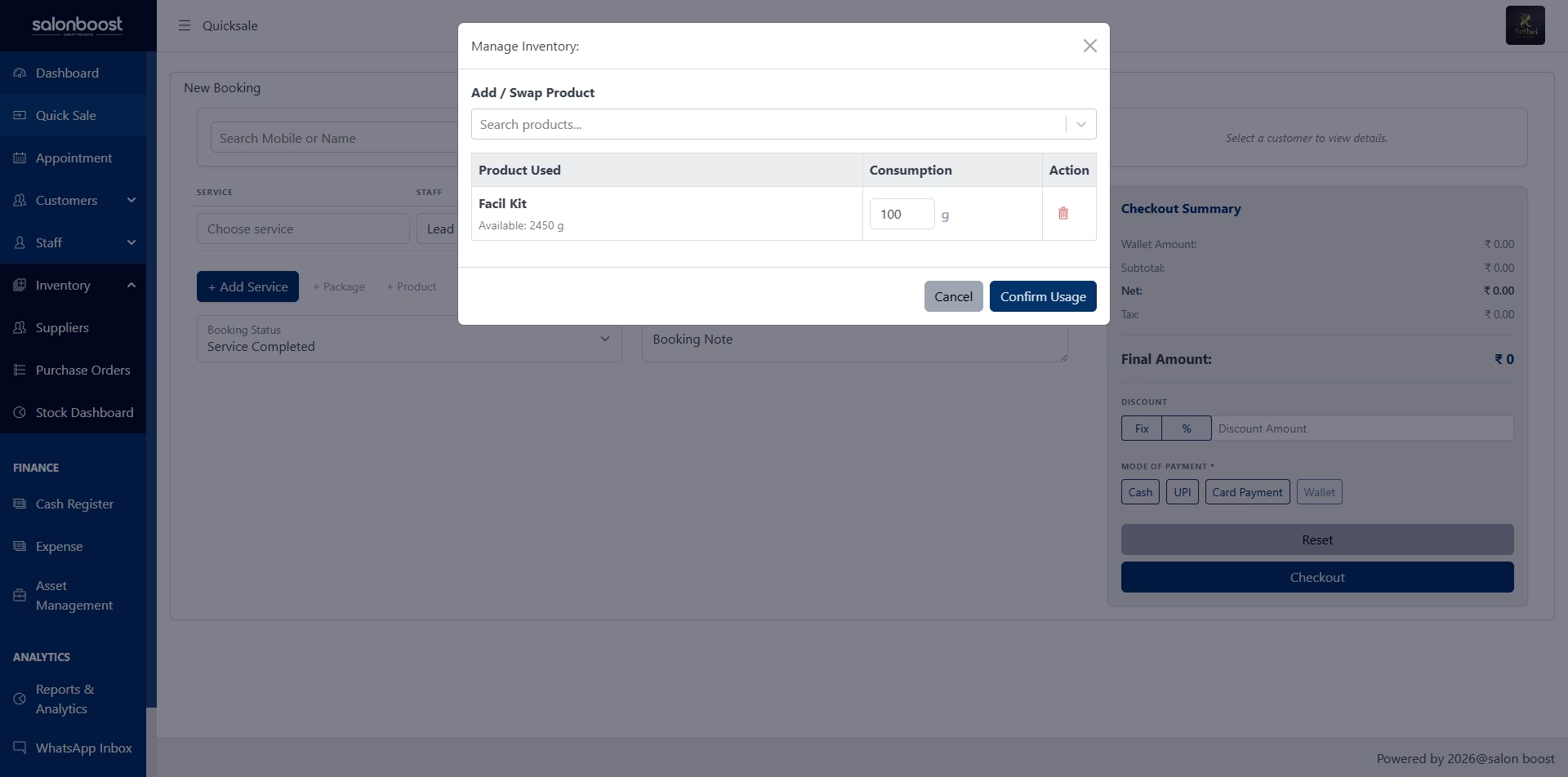
Products linked to services are automatically deducted at checkout — stylists just confirm or adjust quantities.
Why This Matters for Multi-Branch Salons
If you run multiple branches, auto-deduction gives you per-branch inventory visibility without requiring a dedicated inventory manager at each location. You can compare product consumption across branches and spot anomalies from a single dashboard. This is especially valuable for salon chains expanding in tier-2 cities like Mysore, Jaipur, and Indore where hiring specialized inventory staff is not feasible.
Low-Stock Alerts via WhatsApp
Every product in SalonBoost has a configurable “reorder point” — a minimum stock threshold that you set based on your salon's consumption patterns and vendor delivery lead times. When any item falls below its reorder point, the salon owner gets an instant WhatsApp notification.
Why WhatsApp instead of email or in-app notifications? Because Indian salon owners live on WhatsApp. They check it 50+ times a day. An email notification gets buried. An in-app alert requires opening the software. A WhatsApp message gets read within minutes.
How to Set Smart Reorder Points
Fast-moving products (popular shampoos, basic colour shades): Set reorder point at 10–15 units. These run out fast and vendors may take 2–3 days to deliver.
Medium-moving products (specialty treatments, less common colour shades): Set reorder point at 5–8 units. Balance between availability and overstocking.
Slow-moving products (premium treatments used once a month): Set reorder point at 2–3 units. You don't want capital locked in slow-moving stock.
The key insight: not all products need the same reorder threshold. A generic “reorder at 5 units” rule leads to stockouts for fast-moving items and overstocking for slow-moving ones. SalonBoost lets you set individual thresholds for each product based on your salon's actual consumption data.
Pro Tip: Use 3 Months of Data Before Setting Thresholds
When you first start using SalonBoost, set conservative reorder points (higher thresholds). After 3 months, you'll have consumption data that shows exactly how fast each product moves. Then refine your thresholds based on real numbers, not gut feeling.
WhatsApp Purchase Orders to Vendors
Ask any Indian salon owner how they reorder stock, and you'll hear the same story: call the vendor, dictate a list from memory, hope they write it down correctly, follow up three times, argue about prices when the delivery arrives. This process eats 2–3 hours every week and still results in wrong deliveries, missing items, and price disputes.
SalonBoost's WhatsApp purchase order feature eliminates this entirely:
Create PO in 1 Tap
Select products, quantities, and vendor — PO is generated instantly with product names, quantities, and agreed prices
Send via WhatsApp
Formatted PO sent directly to vendor's WhatsApp — they see exact product names, quantities, prices, and delivery date
Full Audit Trail
Every PO is saved with date, vendor, items, and delivery status — no more “I never ordered that” disputes
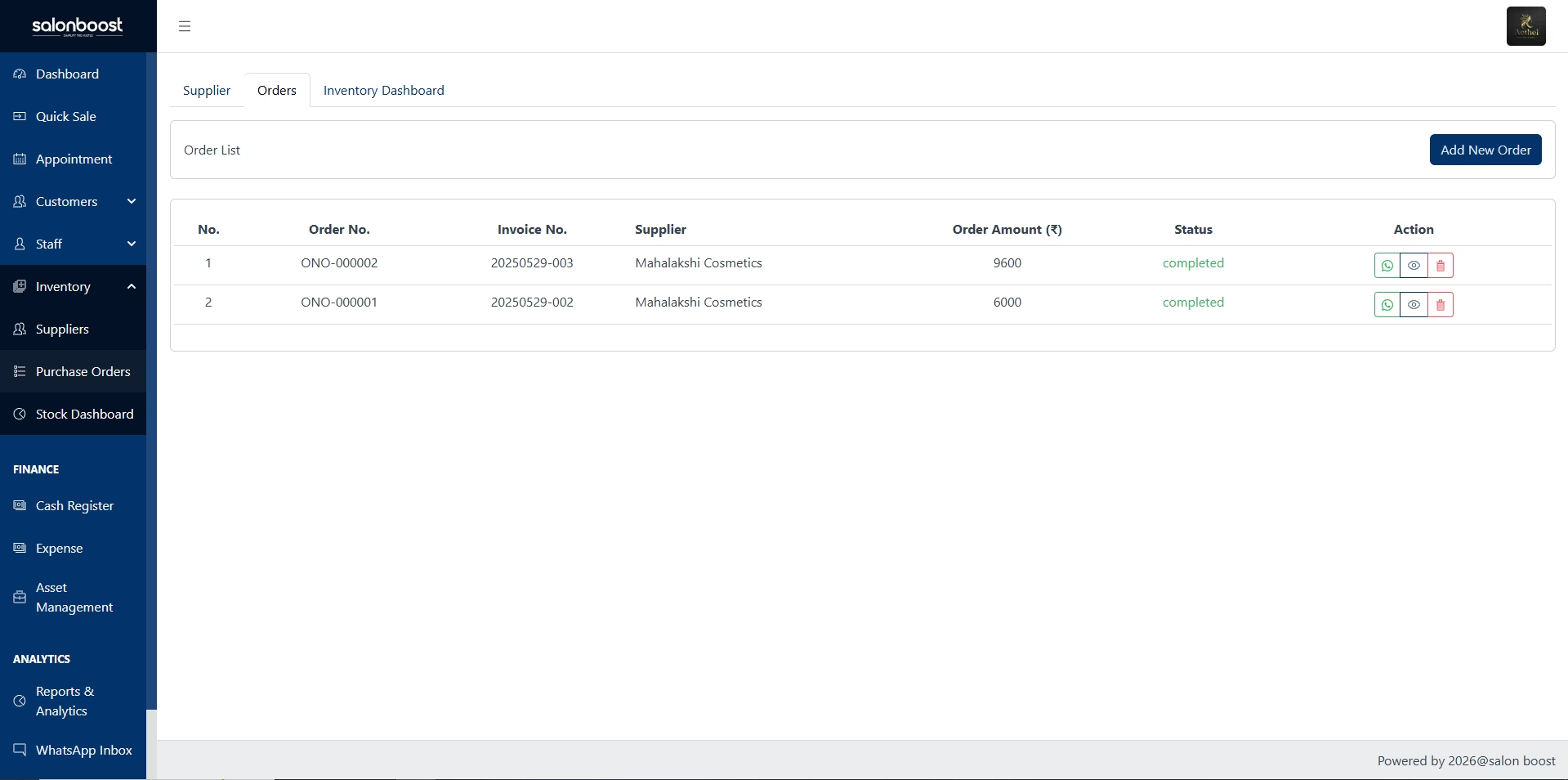
Create and send purchase orders to vendors directly via WhatsApp — with a full audit trail.
Time Saved: 2–3 Hours Per Week
Salon owners who switch from phone-based ordering to WhatsApp POs report saving 2–3 hours per week on vendor communication alone. Over a year, that's 100+ hours freed up — time you can spend training staff, marketing your salon, or simply going home earlier.
The biggest benefit beyond time savings is the paper trail. When a vendor delivers 18 tubes instead of 20, you have a WhatsApp PO proving you ordered 20. When they try to charge ₹380 per tube instead of the agreed ₹350, you have the price documented. This alone saves salons thousands of rupees per month in vendor disputes.
Product-Service Mapping: The Foundation of Auto-Deduction
Product-service mapping is what connects your service menu to your inventory. For every service you offer, you define which products are used and the default quantity consumed. This mapping is what enables auto-deduction to work automatically.
Here's an example of how a typical Indian salon might set up their product-service mapping:
| Service | Product Used | Default Qty | Est. Cost/Service |
|---|---|---|---|
| Hair Colour (Global) | L'Oreal Inoa 60ml Tube | 1.5 tubes (90ml) | ₹525 |
| Developer 20 Vol (1000ml) | 90ml | ₹45 | |
| Keratin Treatment | Keratin Serum (500ml bottle) | 10ml | ₹120 |
| Clarifying Shampoo (1000ml) | 15ml | ₹22 | |
| Haircut (Men) | Shampoo (1000ml) | 8ml | ₹6 |
| Facial (Gold) | Gold Facial Kit (single use) | 1 kit | ₹180 |
| Cotton Pads (pack of 100) | 4 pads | ₹8 | |
| Hair Spa | L'Oreal Hair Spa Cream (500g) | 30g | ₹54 |
Once this mapping is set up, every time a stylist bills a “Hair Colour (Global)” service, SalonBoost automatically knows that 1.5 tubes of L'Oreal Inoa and 90ml of developer were used. The stylist can adjust the quantity at checkout if the actual usage was different, but the defaults ensure that nothing gets missed even during busy hours.
This mapping also gives you something most salon owners have never had: accurate per-service product cost data. When you know that your Hair Colour service costs ₹570 in products and you charge ₹2,500, your real product margin is 77%. But if your Keratin Treatment costs ₹142 in products and you charge ₹3,500, your product margin is 96%. This data helps you make smarter decisions about pricing, promotions, and which services to push.
Setup Takes 30–60 Minutes
Setting up product-service mapping for a typical salon with 20–30 services takes about 30–60 minutes. You do it once, and the system handles auto-deduction from that point forward. SalonBoost's onboarding team helps you set up these mappings during the initial setup call, so you don't have to figure it out alone.
Manual Tracking vs. SalonBoost: An Honest Comparison
We're obviously biased toward software (we built one), but here's an honest side-by-side comparison so you can decide what's right for your salon's current stage:
| Feature | Notebook / Excel | SalonBoost |
|---|---|---|
| Stock tracking | Manual entry, often forgotten during busy hours | Auto-deduction at checkout |
| Colour usage tracking | Not tracked at all | Stylist enters exact grams at checkout |
| Low-stock alerts | Visual inspection — owner checks shelves | Instant WhatsApp alert with custom thresholds |
| Purchase orders | Phone calls, no paper trail | One-tap WhatsApp PO to vendors |
| Expiry tracking | Relies on memory / visual checks | Automated expiry date alerts (30/60/90 days) |
| Retail vs. professional | Same pile, same list | Separate categories with different reorder rules |
| Per-service product cost | Unknown — no way to calculate | Automatic cost tracking per service |
| Vendor payment tracking | Separate tally / memory | Integrated payment status per vendor |
| Audit accuracy | 50–70% (manual errors compound daily) | 95%+ (auto-tracked, verified at checkout) |
| Time spent per week | 4–6 hours | Under 30 minutes |
The comparison above reflects what we hear from salon owners who switched from manual tracking to SalonBoost. Individual results vary based on salon size and current processes.
The Real-Time Inventory Dashboard
SalonBoost's inventory dashboard gives you a single-screen view of everything happening with your stock. No digging through registers, no opening spreadsheets, no calling staff to check what's on the shelf.
At a glance, you can see: total stock value, items below reorder point, products expiring within 30 days, top-consuming products this month, and consumption trends over time. For multi-branch salons, you get per-branch breakdowns so you can spot which location is consuming more product than expected.
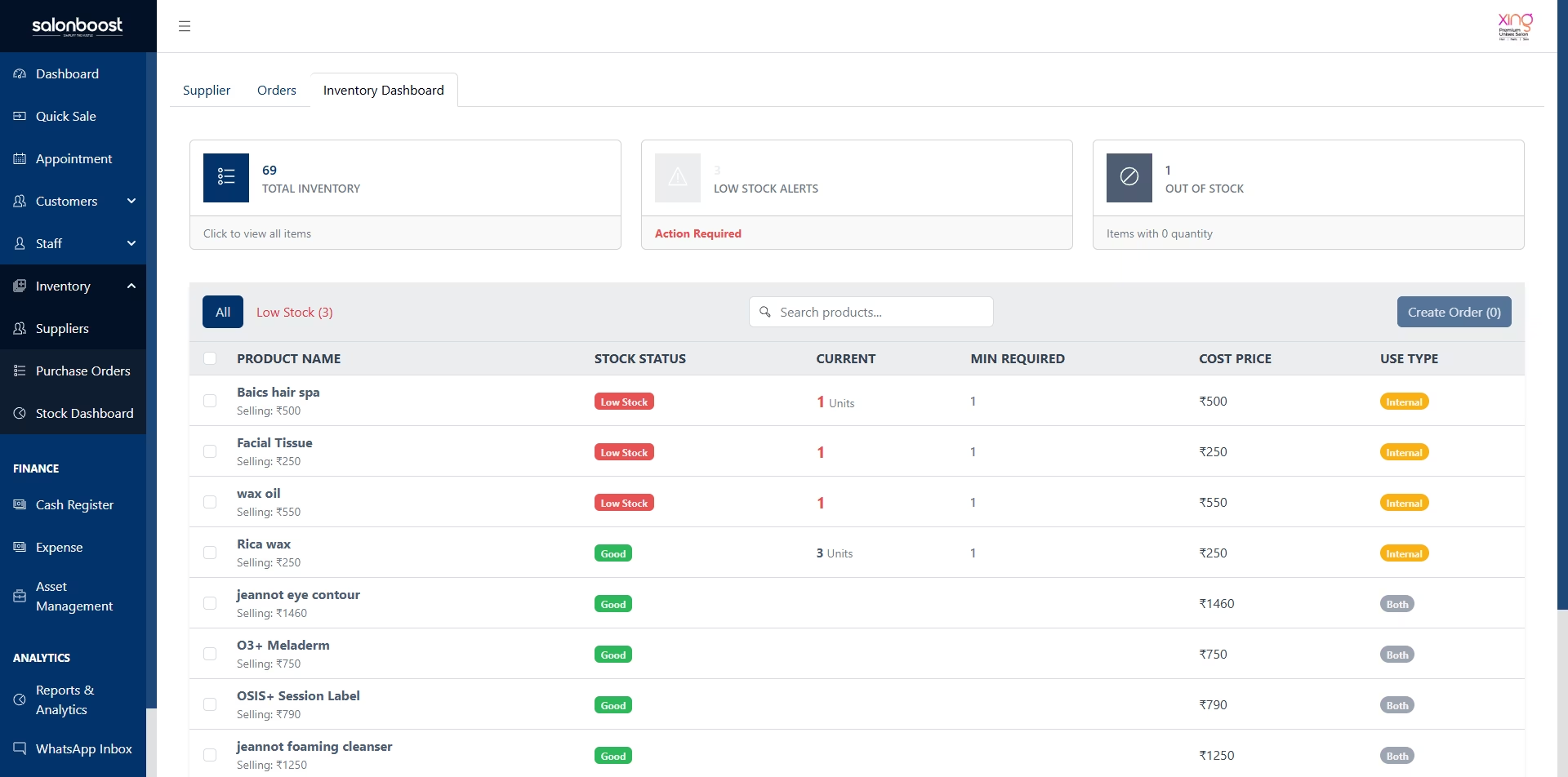
The SalonBoost inventory dashboard — real-time stock levels, categories, and low-stock alerts at a glance.
The dashboard also integrates with your analytics and reports module, so you can correlate inventory consumption with revenue, identify your highest-margin services, and spot waste patterns before they drain your profits.
Seasonal Inventory Planning for Indian Salons
Indian salons have some of the most dramatic demand swings of any retail business. Wedding season, festivals, summer holidays, and even exam results announcements all create predictable demand spikes. Yet most salons order the same quantities year-round and end up either turning away clients during peak periods or sitting on dead stock during lean months.
Here's a seasonal inventory planning calendar based on patterns we've observed across 500+ salons on SalonBoost:
October – February: Wedding Season (Peak)
This is the busiest period for most Indian salons. Bridal packages, party makeup, hair styling, mehendi — demand for premium products skyrockets. Stock up on bridal makeup kits, hair setting products, premium colour shades, and festive nail polish sets.
Action: Increase reorder points by 50–80% for bridal and party-related products starting September. Order in bulk from vendors to lock in better pricing before the rush.
Diwali & Navratri (September – November)
Festival grooming drives massive walk-in traffic. Facials, threading, hair colour, and men's grooming packages see 2–3x normal demand. Retail product sales also spike as clients buy gifts (skincare sets, perfumes, hair care kits).
Action: Stock extra facial kits, threading thread, and retail gift sets 3–4 weeks before festivals. Create combo offers to move slow-moving retail stock.
March – May: Summer Season
Summer brings increased demand for anti-tan facials, sun protection products, hair smoothening, and dandruff treatments. School/college summer breaks also drive children's haircut volumes up.
Action: Stock up on sun protection products, de-tan kits, and smoothening serums. Consider stocking lighter hair colours (highlights, balayage products) as demand shifts from dark global colours to lighter summer tones.
June – August: Monsoon (Lean Period)
Walk-in traffic typically drops 20–30% during heavy monsoon months. This is when over-stocked salons get hurt the most — products sit on shelves and expiry dates creep closer.
Action: Reduce reorder quantities by 25–30%. Focus on anti-frizz and hair oil products which see higher demand in humid weather. Use this period to clear near-expiry stock with discounted retail offers.
With SalonBoost's consumption history, you can see exactly how demand shifted during each season last year and plan your ordering accordingly. No more guessing, no more overstocking before Diwali, no more running out of bridal kits during wedding season.
7 Common Inventory Mistakes Indian Salons Make
Even salons that care about inventory often make these mistakes. Recognizing them is the first step to fixing them.
1. Treating all products equally
A ₹50 shampoo sachet and a ₹2,000 colour tube need very different tracking precision. Apply the 80/20 rule: 20% of your products likely account for 80% of your product spend. Track those high-value items with military precision.
2. Not counting partial units
A half-used bottle of developer or a partially emptied colour tube still has value. If your system only tracks full units, you're overestimating waste and underestimating actual stock. SalonBoost tracks in ml/g, not just units.
3. Buying based on vendor deals, not demand
“Buy 10, get 2 free” sounds great until 5 tubes expire on your shelf. Always calculate whether the “deal” makes sense based on your actual monthly consumption of that product. If you use 3 tubes per month, buying 12 means 4 months of stock sitting idle.
4. No physical audit schedule
Even with software, you need periodic physical counts. Monthly is ideal, quarterly is minimum. The gap between system numbers and physical count tells you how well your processes are working and whether pilferage is happening.
5. Ignoring expiry dates until it's too late
Set up FIFO (first-in, first-out) — always use older stock first. Run discounted retail sales on products within 60 days of expiry. An expired product has zero value; a product sold at 30% discount still recovers 70% of your cost.
6. No vendor performance tracking
Which vendor delivers on time? Which one consistently short-delivers? Which offers the best prices? Without PO data, you can't answer these questions. SalonBoost's vendor history lets you make data-driven decisions about which vendors to keep and which to replace.
7. Not linking inventory to financial reporting
Your inventory is cash sitting on a shelf. If you don't know your total stock value, your cost-of-goods-sold per service, or your product margin per treatment, you're running your business half-blind. This is where integrated analytics becomes essential.
5 Inventory KPIs Every Salon Owner Should Track
Once your inventory system is running, these are the five numbers that tell you whether it's working. Review them monthly at minimum.
1. Shrinkage Rate
Target: Under 5%Formula: (System quantity − Physical count) ÷ System quantity × 100. This is your most important number. If shrinkage is above 10%, you have a serious problem — likely pilferage or unmapped product usage. Below 5% means your system is working well.
2. Product Cost Ratio
Target: 8–15% of revenueFormula: Total product cost ÷ Total service revenue × 100. For Indian salons, a healthy product cost ratio is 8–15%. If it's above 20%, your services are underpriced or product waste is excessive. If it's below 8%, you might be under-using products and compromising service quality.
3. Stock Turnover Rate
Target: 6–12x per yearFormula: Annual product cost ÷ Average inventory value. A turnover of 6 means you're replacing your entire stock every 2 months, which is healthy. Below 4 means you're sitting on too much dead stock. Above 15 means you might be ordering too frequently and risking stockouts.
4. Wastage/Expiry Rate
Target: Under 2%Formula: Value of expired/wasted products ÷ Total product purchases × 100. If you're throwing away more than 2% of your product investment, your ordering quantities are wrong or your FIFO system isn't working. Track this monthly and investigate any month that exceeds 3%.
5. Stockout Frequency
Target: Zero for top 20 productsHow often do you run out of a product and have to tell a client “sorry, we don't have that”? Track every stockout incident. For your top 20 products (by revenue), the target is zero stockouts per month. If you're experiencing regular stockouts, your reorder points are set too low.
SalonBoost's analytics dashboard automatically calculates most of these KPIs from your auto-deduction data. You don't need to build spreadsheets or do manual math — just open the reports tab and see where you stand.
Real Results: ROI of Proper Inventory Management
Let's do the math for a salon doing ₹3,00,000 per month in revenue with a 30% product cost ratio (₹90,000 in monthly product spend):
Monthly ROI Calculation
Salon with ₹3,00,000/month revenue, ₹90,000/month product cost
That's a 17–21x return on investment from inventory management alone — and this doesn't include the revenue gains from better billing, appointment management, and revenue growth strategies that come bundled with SalonBoost.
What Salon Owners Tell Us
“Before SalonBoost, I had no idea how much colour we were wasting. Once we turned on auto-deduction, we realized one stylist was using almost double the colour per service compared to others. That single fix saved us ₹12,000 per month.”
— Salon owner, Pune (3-chair setup)
“The WhatsApp purchase orders changed everything. I used to spend Sunday evenings calling vendors and dictating lists. Now I create a PO in 30 seconds and send it. My vendors actually prefer it too because the order is clear and accurate.”
— Salon owner, Hyderabad (2-branch chain)
Stop Losing Money to Product Waste
500+ salons use SalonBoost to track inventory automatically, send purchase orders via WhatsApp, and eliminate product waste. Plans start at ₹799/month — less than the cost of one wasted colour tube.
Related Guides

Founder & CEO, SalonBoost
Swetha has helped 500+ salons and spas streamline operations with SalonBoost salon management software. She writes about salon growth strategies, WhatsApp automation, and the Indian beauty industry.